
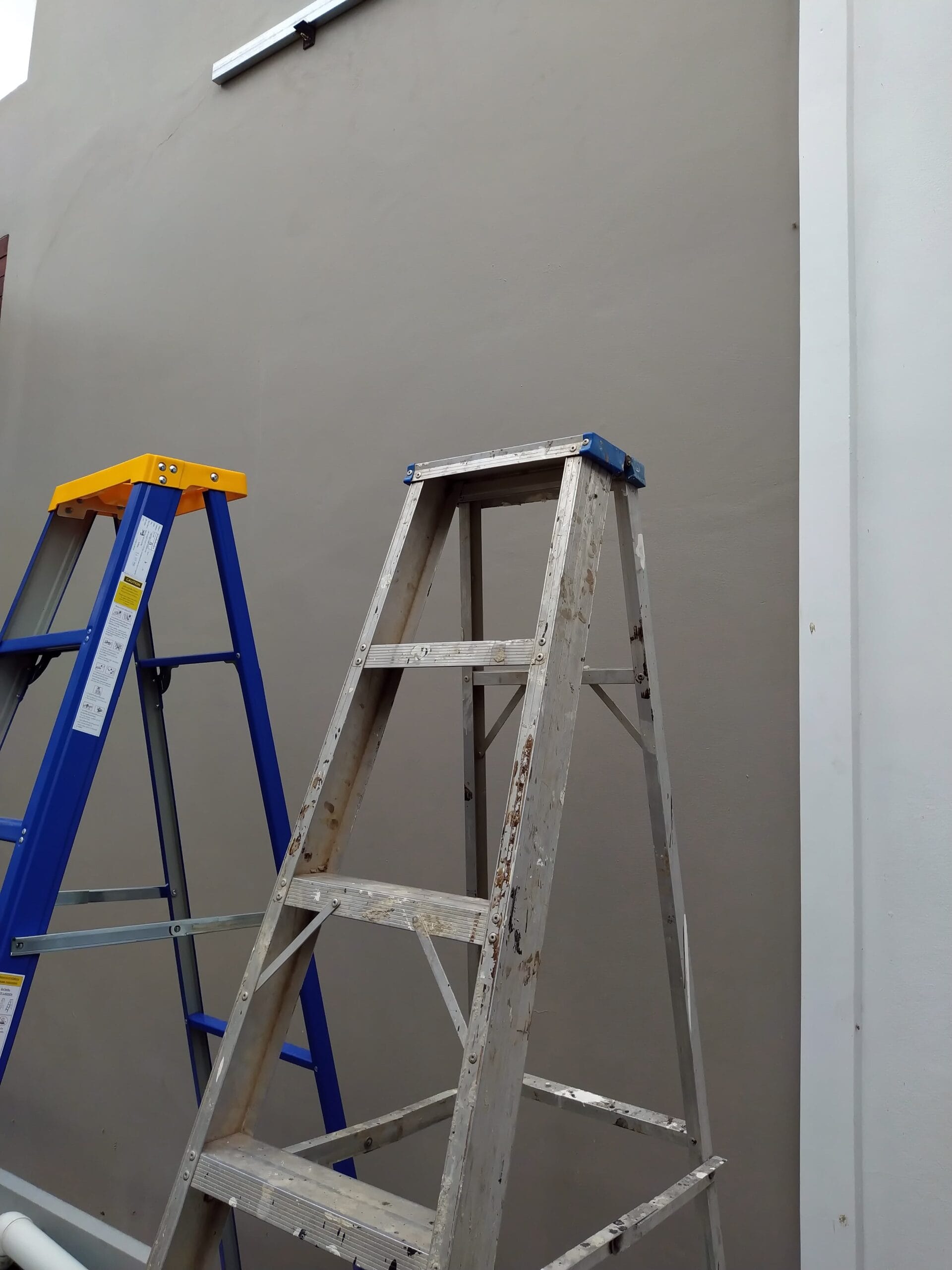
Ladder inspection in Ireland is a legal requirement that many businesses overlook. Ladders are one of the most commonly used pieces of equipment in Irish workplaces. They are also one of the most frequent causes of serious workplace accidents. If your business uses ladders, here is what the law requires and what happens if you do not comply.
Is ladder inspection a legal requirement in Ireland?
Yes. Under the Safety, Health and Welfare at Work (General Application) Regulations 2007, employers must ensure that all work equipment, including ladders, is suitable, properly maintained and inspected at regular intervals by a competent person. Regulation 119 specifically covers equipment used for working at height.
In addition, the Safety, Health and Welfare at Work Act 2005 places a broader duty on employers to ensure, as far as reasonably practicable, that all work equipment is safe and poses no risk to health. Together, these regulations make regular ladder inspection a clear legal obligation for any business that uses ladders in the workplace.
What is a GA3 certificate and does your business need one?
A GA3 certificate is the official Irish form for recording the inspection of work equipment used at height, including ladders. It confirms that a competent person has formally inspected the ladder and deemed it safe for use in accordance with Irish safety standards.
Holding a valid GA3 certificate demonstrates compliance with the Safety, Health and Welfare at Work Regulations and provides documented proof that your ladders are fit for purpose. As a result, if the Health and Safety Authority carries out an inspection or an accident occurs on site, your GA3 records show that you took your legal obligations seriously.
Your insurer may also request GA3 certification. Without it, a claim involving a ladder accident could be refused entirely.
How often do ladders need to be inspected in Ireland?
The regulations do not set a single fixed interval for all ladders. Instead, the required frequency depends on how often the ladder is used and the environment it operates in. As a general guide, ladders in regular use on construction sites or in industrial settings need inspection every six months. Ladders used less frequently in lower-risk environments may need annual inspection.
In addition to formal inspections, employees should carry out a brief visual check before using any ladder. However, a pre-use check by an employee does not replace a formal inspection by a competent person. Both are required.
Who needs ladder inspections?
Any business that uses ladders as part of its work activities needs regular formal inspections. This includes construction companies, electrical contractors, facilities management companies, manufacturing businesses, retail and warehouse operations, farms and agricultural businesses, and schools and public buildings.
In short, if your employees use a ladder at work, that ladder needs to be formally inspected and certified on a regular basis.
What does a ladder inspection cover?
A competent inspector checks the entire ladder, not just the obvious visible parts. At Procheck, our ladder inspections cover the following:
Our inspector checks all rungs for cracks, bends, corrosion or looseness. We check the stiles, which are the side rails, for damage, distortion or signs of stress. The feet and end caps get checked to confirm they are intact and provide adequate grip. Locking mechanisms and spreader bars on stepladders get tested to confirm they engage fully and hold securely. We also check any labelling or load rating markings to confirm they are legible and accurate. Finally, we tag each ladder with the inspection date and the next due date, and we issue a GA3 certificate on completion.

What are the consequences of not having your ladders inspected?
The consequences of non-compliance are serious. The Health and Safety Authority can issue improvement or prohibition notices and pursue prosecution for breaches of the regulations. Business owners and directors face significant fines. In cases of gross negligence, criminal liability is also possible.
Furthermore, if a ladder accident injures an employee and you cannot demonstrate that the ladder was regularly inspected and maintained, the civil liability exposure is considerable. Your insurer can also refuse to pay out on a claim if inspection records were not in place at the time of the accident.
The human cost matters too. Falls from ladders cause some of the most serious workplace injuries in Ireland, including life-changing injuries and fatalities. Regular professional inspections are one of the most straightforward ways to reduce that risk.
Who can carry out ladder inspections in Ireland?
Inspections must be carried out by a competent person with the right training, knowledge and experience to identify defects and assess whether a ladder is safe for continued use. In other words, you cannot assign this to an untrained member of staff and meet your legal obligations.
At Procheck, our team holds the training and certification to carry out formal ladder inspections, issue GA3 certificates and provide full documentation on completion. We also schedule reminders for your next inspection so it does not get missed.
Covering Mayo, Sligo, Roscommon, Galway and Leitrim
Procheck is based in Ballina, Co. Mayo and provides ladder inspection services across Ireland, Nationwide. We work with businesses of all sizes across construction, facilities management, retail, agriculture and more.
To book an inspection or get a quote, contact us at info@procheck.ie or call 086 8570303.